Who Does Martyn's Law Apply To?
Learn who falls under Martyn's Law scope, including capacity thresholds, venue types, exemptions, and how to determine if your organisation needs to comply.
Read articleMartyn's Law, also widely referred to as the Protect Duty during its drafting and consultation stages, is the common name for the Terrorism (Protection of Premises) Act 2025, UK legislation aimed at enhancing preparedness against terrorist attacks at publicly accessible premises and qualifying public events. The Act received Royal Assent on 3 April 2025. After more than a year of anticipation, the Section 27 statutory guidance was published by the Home Office on 15 April 2026, alongside three supplementary papers covering capacity calculation, illustrative scope examples and further training resources. The SIA, which regulates the Act, said on 17 July 2026 that the Act is expected to come into force in spring 2027 and that it will confirm the exact date ahead of time.
The Law is named after Martyn Hett, one of 22 people killed in the 2017 Manchester Arena bombing. His mother, Figen Murray, has campaigned tirelessly since the attack, walking 200 miles from Manchester to 10 Downing Street, gathering cross-party support, and pushing successive governments to introduce statutory protective duties for publicly accessible premises. Figen Murray was awarded an OBE for her work, and the legislation that bears her son's name reflects more than seven years of advocacy. Anyone responsible for a venue that falls in scope owes a substantial part of the structure of the Act, and of the supporting ACT awareness training framework now embedded in the statutory guidance, to her campaign.
For a detailed breakdown of who falls under Martyn's Law scope, including capacity thresholds, venue types, exemptions, and how to determine if your organisation needs to comply, see our comprehensive guide: Who Does Martyn's Law Apply To?.
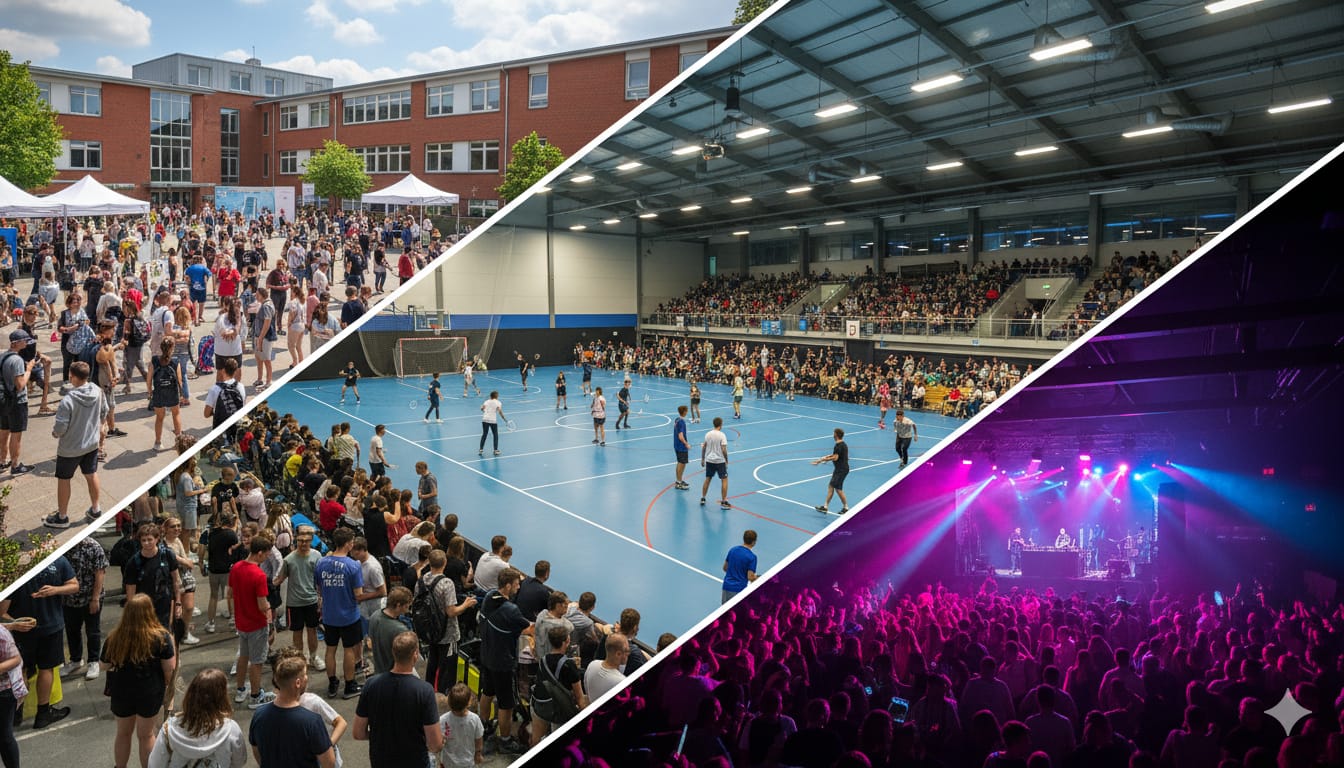
The Act applies to publicly accessible premises where 200 or more people could reasonably be expected at one time, and to qualifying events where 800 or more are expected with entry checks. Premises include stadiums, theatres, nightclubs, shopping centres, community halls, hotels, offices with public areas and other publicly accessible buildings (gov.uk). Premises with 200 to 799 people are standard tier; premises with 800 or more, and qualifying events, carry enhanced-tier requirements. Places of worship and most education premises stay standard tier whatever their capacity. For premises, at least one building must be involved, the premises must be publicly accessible and used for a Schedule 1 purpose, and it must not be among the exclusions in Schedule 2 of the Act.
Our Martyn's Law standard vs enhanced tier comparison owns this topic, with a side-by-side table of procedures, measures, documentation, notification deadlines and penalties. In summary:
Supplementary Document A published with the April 2026 guidance formalises acceptable methods for calculating capacity. Responsible persons may use fire safety safe occupancy figures, historic attendance data or any other justified method, and the reasonable-expectation test must include staff and volunteers as well as members of the public. Operators should document the method they used and the assumptions behind it, particularly where peak attendance varies across events; the same figure and method go into the SIA notification.
The guidance explicitly addresses shared spaces (entrances, exits, public realm) and multi-responsible-person scenarios such as shopping centres, transport hubs and high-street parades, with a coordination duty between the parties involved. Although coordination is not itself new in law, it is newly emphasised and likely to be a focus of early SIA enforcement. Since 15 October 2026 the Principal Use of Premises Regulations 2026 also settle which use counts as the principal use of a mixed-use premises, and therefore who the responsible person is, by looking at how the building was designed or adapted, its physical features, its continued use and how the local authority classifies it.
Compliance is covered in two places. Our Martyn's Law compliance page sets out what to do now, the emergency communication systems that deliver the four procedures, and how an assessment works; our compliance checklist gives the ten steps, every dated milestone and the notification deadlines, with a free PDF. In outline: confirm which premises (200+) and events (800+) are in scope; name a responsible person, using the principal-use test for mixed-use buildings; carry out a terrorism risk assessment; write evacuation, invacuation, lockdown and communication procedures; put staff through ACT Awareness Training, the free ProtectUK programme referenced throughout the statutory guidance, and keep a register; engage local police and the council; for enhanced tier, plan the four categories of measures and the compliance document; and gather the notification information so you can notify the SIA within three months of commencement.
Education settings are treated differently under Martyn's Law. Early years, primary, secondary and further education premises remain in the standard tier even if more than 800 people are present, and events held at those premises are not drawn into scope as qualifying events (gov.uk). Higher education premises such as universities do not get this exception and can be enhanced tier at 800 or more. The Law recognises that educational environments require a proportionate approach, though institutions should still consider basic protective measures and staff training.
Audio-visual systems play a crucial role in meeting the requirements of Martyn's Law. Strive AV's Martyn's Law Compliance service page outlines several ways that technology can support preparedness.
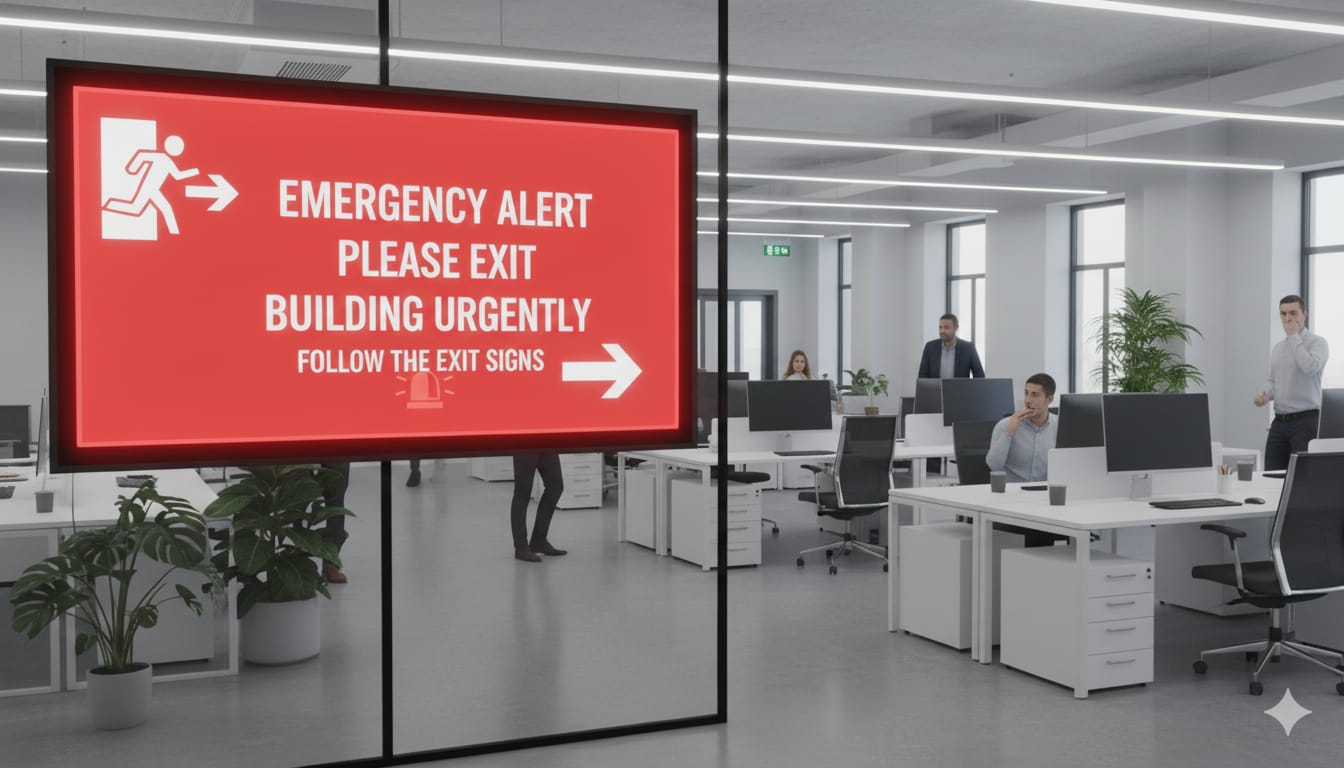
Real-time emergency communication: Integrated PA systems and digital signage can broadcast clear, multilingual instructions during an incident.
Crowd management: Surveillance cameras and occupancy analytics help monitor crowd flow and identify potential bottlenecks or vulnerabilities.
Staff and visitor education: Interactive displays and training platforms can be used to educate staff and visitors about security protocols and evacuation routes.
Surveillance integration: CCTV systems, including video walls in command centres, provide situational awareness for security personnel.
Accessible communication: Solutions such as hearing-assisted systems ensure everyone can receive alerts and instructions.
Compliant record-keeping: Digital systems can log compliance activities, such as risk assessments and training sessions, to facilitate audits and demonstrate due diligence.
Masscoms is Strive AV's specialist partner for Martyn's Law compliance. Their Martyn's Law-ready emergency response system pairs with our public address, digital signage and occupancy analytics so your venue's protective duty is covered end to end.
Combined response and visitor-communication coverage, deployed and supported by a single integration team.
Visit MasscomsMartyn's Law marks a significant shift in how UK venues approach public safety. This page explains the Law's purpose, who it affects and what has happened since Royal Assent. To dive deeper into specific questions, explore our supporting pages:
Who does Martyn's Law apply to?
Martyn's Law standard vs enhanced tier: requirements compared
Martyn's Law compliance checklist and implementation timeline
Martyn's Law compliance: systems, assessment and support
AV technology and Martyn's Law
If you're unsure where to begin or would like expert guidance on security-oriented AV solutions, contact the Strive AV team. We can help you assess your premises, implement the right technologies and ensure you are ready when Martyn's Law comes into force.
Martyn's Law is the common name for the Terrorism (Protection of Premises) Act 2025, UK legislation that requires publicly accessible premises and qualifying events to assess terrorism risks and put proportionate protective procedures and measures in place. It is named after Martyn Hett, one of the victims of the 2017 Manchester Arena bombing. The Act received Royal Assent on 3 April 2025 with a commitment to at least 24 months before the duties take effect; the SIA said on 17 July 2026 that commencement is expected in spring 2027 and that the exact date will be confirmed ahead of time.
Martyn's Law applies to publicly accessible premises expecting 200 or more people at any one time and to qualifying events expecting 800 or more with entry checks. Premises expecting 200 to 799 people fall under the standard tier; premises expecting 800 or more fall under the enhanced tier, and qualifying events carry the same requirements as enhanced tier premises. Places of worship and early years, primary, secondary and further education premises remain in the standard tier even if more than 800 people are present. Private offices, residential buildings and premises under 200 capacity are generally outside scope.
The standard tier (premises with 200 to 799 people) focuses on basic preparedness: notifying the Security Industry Authority and having workable evacuation, invacuation, lockdown and communication procedures. The enhanced tier (premises with 800 or more, and qualifying events) adds public protection measures across four formal categories (monitoring, movement, physical safety and security, and security of information), a designated senior individual, comprehensive emergency planning and a documented compliance narrative sent to the SIA. Our standard vs enhanced tier comparison sets the two out side by side.
Martyn's Law received Royal Assent on 3 April 2025. The SIA's guidance of 17 July 2026 says the Act is expected to come into force in spring 2027 and that the SIA will confirm the exact date ahead of time; commencement regulations had not been laid as of 23 October 2026. The Section 27 statutory guidance was published on 15 April 2026 (corrected 6 and 7 August 2026), the SIA's Section 12 enforcement consultation closed on 12 June 2026 with final guidance due in autumn 2026, and the notification guidance of 14 July 2026 gives premises three months from commencement to notify the SIA. Organisations should use the remaining window to move from awareness into structured preparation.
Through the SIA's online notification portal on GOV.UK, which is still being built; the SIA will invite volunteers to test it from early 2027 and announce when it opens. Under the Home Office notification guidance of 14 July 2026, premises in scope on the commencement date must notify within three months, later responsible persons within 28 days, and qualifying events within 14 days of first publicity. There is no fee. The notification covers the responsible person's details, anyone they must coordinate with, the premises address, the greatest number of people reasonably expected at once and how that was calculated, relevant licences, and for enhanced tier premises the designated senior individual.
The Security Industry Authority (SIA) is the regulator. Standard tier non-compliance carries financial penalties of up to £10,000. Enhanced tier non-compliance carries the greater of £18m or 5% of global revenue, with daily penalties for continued non-compliance after deadline, restriction notices that can prevent a venue opening or an event proceeding, and criminal offences with up to two years' custodial sentence for senior individuals where a breach involves consent, connivance or neglect. Statutory responsibility cannot be delegated.
The responsible person is the individual or organisation in control of the premises for its principal use, typically the venue operator, landlord, headteacher, building manager or event organiser. They are accountable for risk assessments, staff training, implementing public protection procedures and (for enhanced-tier venues) appointing a designated senior individual to oversee compliance.
AV systems are central to the Act's communication requirements. Digital signage networks can override regular content to broadcast emergency alerts. PA and voice evacuation systems deliver clear instructions across large or noisy venues. Integrated control platforms tie signage, PA, CCTV and access control into a single interface so security teams can issue simultaneous, coordinated alerts. Visual alarms, captioning and multilingual templates also support the Act's emphasis on inclusive, accessible communication.
No, but they are treated differently. Schools, colleges and universities remain in the standard tier even when expected attendance exceeds 800 people, in recognition of the unique nature of educational environments. Events held on educational premises do not become enhanced-tier events simply because they draw large crowds. Educational settings are still required to conduct risk assessments, train staff and develop emergency procedures.
Explore related insights and guides
Martyn's Law (Terrorism (Protection of Premises) Act 2025) requires publicly accessible venues with 200+ people to implement appropriate protection measures. Use our assessment tool to determine your tier and get expert guidance on AV systems for emergency communication and compliance.
Our industry certifications and accreditations