Updated October 2026. This article reflects the Section 27 statutory guidance (15 April 2026, corrected August 2026), the SIA's regulator guidance of 17 July 2026, which confirms that places of worship stay in the standard tier whatever their capacity, and the Home Office notification guidance of 14 July 2026. Commencement is expected in spring 2027, with the exact date still to be confirmed. The four formal categories of public protection measures (monitoring, movement, physical safety and security, and security of information) only become a legal duty for a place of worship when it hosts a qualifying event of 800 or more with entry checks.
This article is part of our comprehensive guide to Martyn's Law. For an overview of the legislation, who it applies to, tier requirements, implementation timelines, and how AV technology can support compliance, see our complete guide to Martyn's Law.
Martyn's Law, the Terrorism (Protection of Premises) Act 2025, applies to a wide range of publicly accessible venues, including places of worship. Under the new legislation, churches, mosques, synagogues, temples and other faith-based venues need to assess their capacity, put proportionate protective procedures in place and notify the SIA. This post explains how the tiers apply to faith venues, outlines sector-specific duties and provides a practical roadmap for religious organisations.
Does Martyn's Law apply to my place of worship?
Yes, if 200 or more people may reasonably be expected on the premises at the same time, including clergy, staff and volunteers. Places of worship with a capacity below 200 are out of scope.
Standard tier at any capacity. Places of worship are treated differently from most other premises: a place of worship that can hold 200 or more people is in the standard tier, and it stays in the standard tier even if 800 or more people may be present (gov.uk, SIA guidance, 17 July 2026). A cathedral, a large mosque or a megachurch therefore carries the standard duty, not the enhanced duty, for its ordinary worship and community use.
Qualifying events are the exception. If a place of worship hosts an event that is open to the public, has entry checks such as tickets or wristbands, and expects 800 or more people, that event is a qualifying event and carries the same requirements as enhanced tier premises for the duration of the event. A ticketed cathedral concert or a large faith festival with entry control is the typical case.
Nature of the venue: Religious buildings used primarily for worship or community gatherings are considered publicly accessible under the Act (gtlaw.com). Temporary events hosted off-site (e.g., outdoor festivals) may also fall under Martyn's Law as qualifying events depending on their size, entry checks and who controls them.
For a detailed breakdown of who falls under Martyn's Law scope, see our guide: Who Does Martyn's Law Apply To?.
Core responsibilities
Standard tier duties (every place of worship with 200+ capacity)
For places of worship, the Law requires proportionate protective procedures that focus on planning and preparedness, not onerous security infrastructure:
Evacuation and invacuation plans: Develop clear procedures for safely evacuating or evacuating people into a secure area (congregational.org.uk). Consider multiple exit routes and how to guide worshippers with mobility challenges.
Lockdown procedures: Agree on how to secure doors and restrict access during an incident (congregational.org.uk). Simple measures such as locking external doors or closing shutters may suffice (skillsforhealth.org.uk).
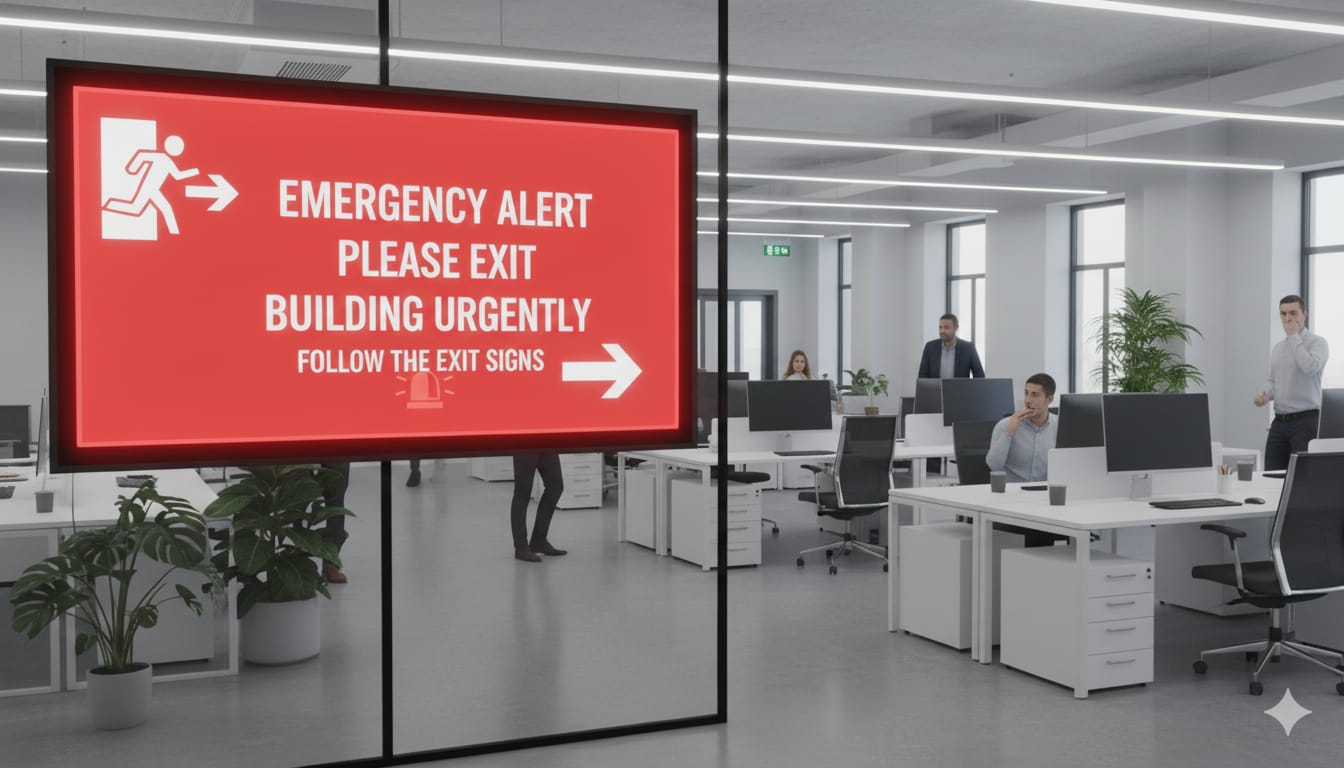
Communication: Plan how to alert congregants and visitors in the event of an attack. Announcements via existing PA systems, digital signage or text alerts can help move people to safety (congregational.org.uk).
Training and awareness: Ensure staff, clergy and volunteers understand the risks and know how to implement the plans. Volunteer stewards play a vital role in greeting visitors, monitoring entrances and supporting evacuations.
Notify the SIA: Both tiers must notify the SIA once the Act commences. Under the Home Office notification guidance of 14 July 2026, a place of worship in scope on the commencement date has three months to notify through the SIA's online portal on GOV.UK; there is no fee. The notification names the responsible person (for example the parochial church council, mosque committee or temple trust, with its charity number), gives the postal address and states the greatest number of people reasonably expected at once and how that figure was calculated.
Qualifying events hosted at a place of worship (800+ with entry checks)
A place of worship never becomes enhanced tier premises, but a ticketed event it hosts can be a qualifying event. When a cathedral concert, a faith festival or a similar event is open to the public, has entry checks and expects 800 or more people, the responsible person for the event must, in addition to the procedures above:
Conduct a formal terrorism risk assessment and produce a compliance document (skillsforhealth.org.uk). The April 2026 statutory guidance is explicit that this document is a narrative, not a checklist: it must explain what is in place, why each measure is expected to reduce harm, and where the chosen approach differs from what would normally be expected, why.
Address the four formal categories of public protection measures (April 2026 guidance): monitoring (CCTV, observation arrangements), movement (control of access, queuing, vehicle management), physical safety and security (barriers, glazing, layout) and security of information.
Designate a senior individual: Where the responsible person is an organisation (such as a parochial church council, mosque committee or temple trust), a senior individual must be designated. Statutory responsibility cannot be delegated, and the senior individual is personally exposed to criminal liability of up to two years' imprisonment for breaches involving consent, connivance or neglect. In multi-use buildings (e.g., a church that rents space to community groups), both the property owner and tenant may have obligations and a coordination duty between them.
Notify the event within 14 days of first publicity. Qualifying events must be notified to the SIA within 14 days of the event date first being made public, or within 14 days of commencement if the event was publicised before the Act commenced.
Consider additional security measures: High-capacity events might need CCTV, access control, or bag checks to meet the requirement to take "reasonably practicable" steps (skillsforhealth.org.uk). Qualifying event financial penalties run up to £18m or 5% of worldwide revenue (whichever is higher), with daily penalties for continuing breaches and the possibility of a restriction notice preventing the event from proceeding. Large places of worship that do not host qualifying events may still choose to adopt some of these measures voluntarily; the statutory duty for their ordinary use remains the standard tier.
For a detailed comparison of standard and enhanced tier requirements, see our guide: Martyn's Law Standard vs Enhanced Tier: Requirements Compared.
Practical steps for places of worship
Determine capacity: Count seating and standing room, including overflow areas. Your local fire certificate or capacity assessment can provide a baseline. The April 2026 Supplementary Document A formalises acceptable methods, fire safety safe-occupancy figures, historic attendance data or any other justified method, with the reasonable-expectation test including staff and volunteers as well as worshippers.
Develop a proportionate plan: For churches, mosques and temples of any size, a workable emergency plan covering evacuation, invacuation, lockdown, and communication will meet the standard-tier requirement (congregational.org.uk). Tailor the plan to your building's layout and congregation demographics.
Train staff and volunteers, including ushers, stewards, and church wardens. Use tabletop exercises or scenarios to practise response skills (skillsforhealth.org.uk).
Collaborate with local authorities: Work with police and council officials on risk assessments, training sessions and integration with local counter-terrorism resources. The Section 27 statutory guidance was published on 15 April 2026 and is available on gov.uk (congregational.org.uk). The SIA's Section 12 enforcement consultation closed on 12 June 2026, and its final enforcement guidance is due in autumn 2026.
Review technology: Ensure your PA system covers all worship spaces. Consider digital signage or LED screens to display emergency instructions. If you have CCTV, check that cameras cover entrances and key spaces and that footage is retained securely. Integrated AV systems can streamline communication across your building.
For more information on how AV technology can support Martyn's Law compliance, see our complete guide to Martyn's Law.
Document and update: Record your procedures and keep them under review. Assign a responsible person to keep the plan current and liaise with regulators once enforcement begins (gtlaw.com).
Staying informed
The Section 27 statutory guidance was published on 15 April 2026, with a corrected PDF on 7 August 2026 (gov.uk). The SIA's guidance of 17 July 2026 says commencement is expected in spring 2027, with the exact date to be confirmed ahead of time (gov.uk). Places of worship should now move from awareness into structured preparation. Regularly check Protect UK and Home Office updates for sector-specific advice and take advantage of training offered to volunteers and staff.
For a detailed implementation timeline and compliance checklist, see our guide: Martyn's Law Implementation Timeline & Compliance Checklist.
How Strive AV can help
Audio-visual technology plays a crucial role in keeping congregants informed during an emergency. Strive AV's Martyn's Law Compliance service can help you integrate PA systems, digital signage, CCTV, and emergency alert technology, ensuring your plans are actionable and inclusive. From assessing your existing equipment to designing scalable solutions, we can support you every step of the way.
For more comprehensive information about Martyn's Law, including who it applies to, tier requirements, special considerations for education settings, and how AV technology can support compliance, see our complete guide to Martyn's Law.
This post is part of our Martyn's Law series. For a high-level overview, see our Martyn's Law guide. You can also explore posts covering the differences between the standard and enhanced tiers, how to prepare using our compliance checklist and sector-specific advice for education, corporate, retail and hospitality.
Frequently Asked Questions
Q.Does Martyn's Law apply to small churches and chapels?
Places of worship with a capacity below 200 people are generally exempt from Martyn's Law's mandatory requirements. Most parish churches, small chapels and community-sized worship spaces fall outside scope. Larger congregational buildings, cathedrals and venues that host events expecting 200 or more attendees must comply with at least standard-tier duties.
Q.Are religious gatherings exempt from Martyn's Law?
No. Religious buildings used primarily for worship and community gatherings are considered publicly accessible under the Act and are not blanket-exempt. Capacity is the determining factor. Temporary events held off-site (outdoor festivals, processions) may also fall under Martyn's Law depending on expected attendance.
Q.Who is the responsible person for a place of worship?
The responsible person is the individual or body in control of the premises for its principal use, typically the church wardens, parochial church council, mosque committee, synagogue board or temple trustees. For multi-use venues that hire out space, both the property owner and the event organiser may have duties depending on who has control during a particular event.
Q.What emergency procedures should churches and mosques put in place?
Standard-tier places of worship should develop a simple plan covering evacuation routes, invacuation areas, lockdown procedures and how to alert worshippers (using existing PA or digital signage). Volunteer stewards should be briefed on greeting visitors, monitoring entrances and supporting evacuation, particularly for worshippers with reduced mobility.
Q.How can places of worship comply on a tight budget?
Standard-tier requirements focus on planning, training and proportionate procedures rather than expensive infrastructure. Free templates from ProtectUK and the National Association of Local Councils support risk assessments, the SIA has said it will publish optional standard-tier templates before commencement, and existing PA systems can often be repurposed for emergency announcements. Larger venues considering CCTV, digital signage or integrated control should phase investment over the months to spring 2027.
Q.Can a cathedral or large mosque be enhanced tier?
No, not for its ordinary use. The SIA's guidance of 17 July 2026 confirms that places of worship stay in the standard tier even when 800 or more people may be present. The only route to enhanced-level duties is a qualifying event: a ticketed or entry-checked public event at the venue expecting 800 or more people, which must be notified to the SIA within 14 days of first publicity and carries the same requirements as enhanced tier premises for that event.
Q.When do places of worship need to be ready?
Martyn's Law received Royal Assent on 3 April 2025. The Section 27 statutory guidance was published on 15 April 2026, and the SIA's guidance of 17 July 2026 says commencement is expected in spring 2027, with the exact date to be confirmed. The SIA's Section 12 enforcement consultation closed on 12 June 2026, and its final enforcement guidance is due in autumn 2026. Once the Act commences, places of worship in scope have three months to notify the SIA. They should aim to be operationally ready before spring 2027: capacity calculation, responsible person confirmed, public protection procedures in place and the notification information gathered.